

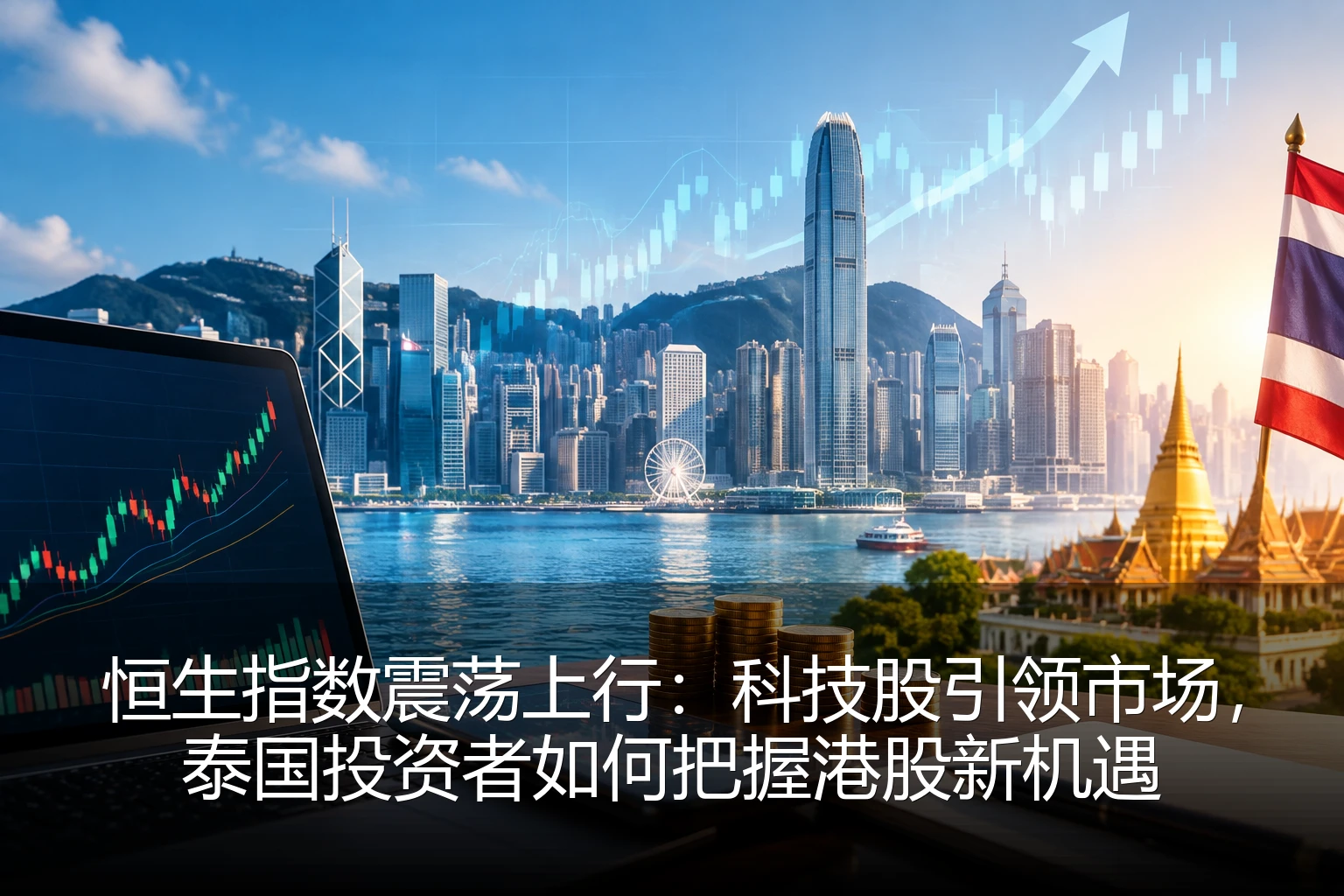
Hang Seng Index Real-time Market Analysis: September 2026 Market Outlook
As of September 23, 2026, the Hong Kong Hang Seng Index has shown an upward trend with fluctuations, closing at 29,150.36 points, an increase of 0.68% from the previous trading day. The technology sector has performed remarkably, becoming the core driver boosting the index. Market analysts point out that with expectations of a shift in US Federal Reserve policy, the valuation advantage of Hong Kong stocks is evident, attracting continuous inflow of Southbound funds and providing market support.
Market Overview: Hang Seng Rises Amid Fluctuations, Led by Tech Stocks
The Hang Seng Index has generally trended upward with fluctuations this week, with a single-day gain of 1.2% on September 22, setting a two-week high. In terms of sector performance, technology stocks have been the main leaders in the market, with the Hang Seng Tech Index rising by 3.5% in a week, outperforming the broader market. Shares of tech giants such as Tencent Holdings (00700.HK) and Alibaba (09988.HK) have risen, driving active trading in related ETFs.
From a technical analysis perspective, the Hang Seng Index has found strong support near 28,500 points, and the short-term moving average system shows a bullish arrangement, while the MACD indicator suggests strengthening upward momentum. However, market analysts also caution investors that there is a technical resistance level near 29,500 points, and the index may face a need for consolidation.
Capital Flows: Southbound Funds Continue to Deploy, Institutions Optimistic About Structural Opportunities in HK Stocks
Capital flow data shows that since September, Southbound funds have continuously flowed into the Hong Kong market through Stock Connect, with cumulative net inflows exceeding 20 billion HKD. The technology sector has been favored by capital, accounting for 45% of the net inflow. Institutional investors generally believe that the valuation of Hong Kong stocks is at a historical low, and coupled with positive policy factors, structural opportunities in the market are worth paying attention to.
In terms of capital structure, Mainland institutional investors are the main force behind Southbound funds, accounting for over 60%. This portion of capital is mainly allocated to core assets such as technology, consumption, and finance, while also paying attention to high-growth sectors like new energy and healthcare. Enthusiasm among Thai investors participating in the Hong Kong stock market through cross-border ETFs is also increasing, with data showing a 30% month-on-month increase in trading volume for Thai-HK ETFs in September.
Policy Environment: HKEX Reforms Continue, Market System Advantages Become Prominent
Recently, the Hong Kong Stock Exchange (HKEX) has continuously advanced multiple reform measures, including optimizing trading mechanisms and expanding connectivity scope, further strengthening Hong Kong's position as an international financial center. HKEX officially implemented the T+1 settlement system in September 2026, significantly improving market efficiency and reducing transaction costs. These institutional reforms have injected new vitality into the Hong Kong stock market, attracting more international capital attention.
Furthermore, cooperation in the financial sector between Mainland China and Hong Kong continues to deepen, and the scale of "Cross-border Wealth Management Connect" business continues to expand, providing more investment choices for investors in both regions. Positive policy changes have created a favorable development environment for the Hong Kong stock market and provided convenience for Thai investors to participate in the Hong Kong stock market.
How Thai Investors Can Seize Opportunities in HK Stocks
For Thai investors, the Hong Kong stock market offers diversified investment opportunities. First, the valuation advantage of the Hong Kong stock market is significant; the Hang Seng Index's Price-to-Earnings ratio is currently at a historical low, possessing long-term investment value. Second, the Hong Kong stock market concentrates a large number of high-quality Chinese enterprises, especially in sectors like technology and consumption, providing rich choices for investors.
To participate in HK stock investment, Thai investors can consider the following methods:
- Direct investment in Hong Kong stocks via Stock Connect: Thai investors can participate in Hong Kong stock trading by opening a Stock Connect account through a Hong Kong broker or through Stock Connect services offered by some local Thai banks.
- Investing in Hong Kong stock ETFs: There are multiple ETFs tracking Hong Kong stock indices in the market, such as Hang Seng Index ETFs and Hang Seng Tech Index ETFs, providing investors with convenient investment tools.
- Allocating cross-border ETFs: Some local Thai ETF products include Hong Kong stock assets in their portfolios, allowing investors to indirectly participate in the Hong Kong market through these products.
Risk Warning and Investment Advice
Despite the optimistic outlook for the Hong Kong stock market, investors must pay attention to relevant risk factors. First, global economic uncertainty persists, and changes in the US Federal Reserve's monetary policy may cause market volatility. Second, geopolitical risks may also affect the Hong Kong stock market. Furthermore, the Hong Kong stock market is highly volatile, and investors need to manage risks accordingly.
For Thai investors, experts recommend a "core-satellite" strategy. This involves allocating the majority of funds to core assets such as Hang Seng Index ETFs, while allocating a smaller portion to technology stocks or industry ETFs with high growth potential. Additionally, diversification and regular portfolio rebalancing are effective ways to reduce risk.
Future Outlook: Structural Opportunities in the Hong Kong Stock Market Continue
Looking ahead, the market generally believes that the Hong Kong stock market will continue to offer structural opportunities. On one hand, the fundamentals of the Hong Kong stock market will be supported by the recovery of the mainland economy and improved corporate earnings. On the other hand, the continuous institutional reforms by the Stock Exchange of Hong Kong will further release market vitality. Moreover, the trend of the RMB exchange rate will also have a significant impact on the Hong Kong stock market.
For Thai investors, seizing opportunities in the Hong Kong stock market requires closely monitoring market dynamics and conducting thorough investment planning. It is recommended that investors select suitable investment products and strategies based on their risk tolerance and investment objectives, while also managing risks to achieve stable, long-term investment returns.
In summary, the Hang Seng Index's upward trend, led by technology stocks, provides rich investment opportunities for Thai investors. In the current market environment, the valuation advantages, institutional advantages, and structural opportunities of the Hong Kong stock market are worth paying attention to. Investors should view market fluctuations rationally and seize long-term investment opportunities to preserve and increase their assets.